Sunday, 20 May 2018

Run cycle basic's side view

I have drawn a base run cycle I will use to make a character I select to run
This running cycle has 12 drawn images. I could draw 24, but I won't. The walking cycle is a huge part of my grade, whereas the running cycle is not. So I will stick with 12 drawn images.
I can now draw a character on top of this base I drew, referenced from; 

BSA Code-Balance

BSA Code - Balance
There are many different codes with the BSA (Broadcasting Standards Authority).

From the bsa.govt.nz Website. I found two stories were balance was upheld and not upheld.

Upheld

Institute of Environmental Science & Research Ltd and CanWest TVWorks Ltd - 2007-015

Let Us Spray. Special TV3 investigation into the effects of the chemical 2,4,5-T in New Zealand interviewed residents of Paritutu who believed that various illnesses and birth defects in their families were a result of exposure to the chemical. Balance, fairness, upheld. Accuracy, one point not upheld, all other aspects subsumed. Orders (broadcast of statement, $11,250 costs to complainant).

Not upheld

Prime Minister (Rt Hon Helen Clark) and 4 Others and TV3 Network Services Ltd - 2003-077–081

3 News Special. Interviews with Nicky Hager and Prime Minister about issues raised in Hager’s book "Seeds of Distrust". Upheld: balance (government accountability); accuracy (approach to interview with Prime Minister in comparison with the interview with Mr Hager); fairness (presentation of programme, as Prime Minister not advised of source of allegations and the accuser was interviewed in an earlier section of the programme). Not upheld: balance (science aspect); accuracy (statement that Prime Minister declined her earlier offer to do another interview); fairness (preparation of programme, conduct and style of interview). 
Orders: Broadcast of statement; contribution of $11,000 towards legal costs; payment of costs to the Crown of $14,000.

Wednesday, 16 May 2018

Classical Hollywood

Classical Hollywood
_________________________________________________________________________________

The classical Hollywood period was within the 1920's to the 1950's. Some say that this is the Golden age of Hollywood. During that time, there were many different studios producing films. The major studios were 'Warner Bros. Pictures', '20th Century FOX', 'A Paramount Picture', 'An RKO Radio Picture' and 'Metro Goldwyn Mayer'. 
Image result for Warner Bros. Pictures 1920Image result for 20th Century FOX 1920Image result for A Paramount Picture 1920Image result for An RKO Radio Picture 1920Image result for Metro Goldwyn Mayer 1920 
There were some studios other than the major studios. These were 'Universal Pictures', 'Columbia' and 'United Artists'. They were the minor studios. 
Image result for Universal Pictures 1940Image result for Columbia 1920Image result for United Artists 1920
What these studios did was use a system called the 'Studio System'. The studio system allowed the biggest studios in Hollywood to have total control of the movies that were made and how they were distributed. The major studios created (with their power within the US) created a body of trade called the Motion Picture Producers and Distribution Association (MPPDA) in 1922. The MPPDA's main functions were to encourage the co-operation between the major studios and to work with the US State Department to look out for overseas governments who threaten the Hollywood import restrictions.

The studios also controlled the supply chain of films from the beginning with production to the end with exhibition. One major part in controlling the movies exhibition was called 'block booking'. The studio would sell an entire years worth of films to theaters as one unit. The film range was from the one film really desired, A-budget film, to lower, less desired, B-budget and lower films. Block booking is just one of many techniques used to control the film industry in the classical Hollywood period.

The major studios soon found that films around the world were getting very popular, but were still not respected. Social and religious groups argued that films were degrading moral standards. To control this issue, the MPPDA hired Will Hays to place a self-regulatory code of practice. This created the Motion Picture Production Code of 1930, nick named the 'Hays Code'. It handed most of the taboos like sex and criminal behavior. This code was disregarded in the late 1960's.

The studios were also infamous for 'owning' the stars that were on film, a system known as the 'Star System'. The system basic had the stars as employees of the certain studio they worked for and bounded them in contracts. An image would be created around the star that usually didn't have anything with how the person was in real life. The stars image was very important to the studios. Actors often felt owned they the studios. Sometimes the studios would 'lent' the star to other studios.

Finally, the studios created a 'Narrative structure' that they followed when making films. It was structured with discernible beginning, middle, and end. Their was linear chains of cause and effect events. Also, their was also a resolution at the end of film.


References
Information based upon the section in class.
Images
  • annyas.com/screenshots/warner-bros-logo/
  • https://www.youtube.com/watch?v=P-_bsAKgL2k
  • https://en.wikipedia.org/wiki/Paramount_Pictures
  • https://en.wikipedia.org/wiki/RKO_Pictures
  • https://en.wikipedia.org/wiki/Leo_the_Lion_(MGM)
  • https://www.youtube.com/watch?v=nLx4ucZ8v4Y
  • https://en.wikipedia.org/wiki/Columbia_TriStar_Television
  • https://en.wikipedia.org/wiki/United_Artists

Tuesday, 15 May 2018

Art work

I have forgotten to upload my drawing art stuff
So here it is in a big post. Some good. Some, not good :)

Maya Software

Maya is a good program to make 3D Scenes and backgrounds/objects
This is the starting screen with I box I placed there. There are many different view points.
Technically three different view points, and one is just a new added tool bar. Next is the tool bar is the main tool bar to shape, move and rotate an object. The short cuts to do this on the keyboard is movement being 'w', rotating being 'e' and scale being 'r'. The selection tool shortcut is 'q'.

This is what I can do to the cube if I hold the right button on the mouse and select 'faces'. I made a strange, abstract art look piece. Wow. It looks weird.


Mudbox software

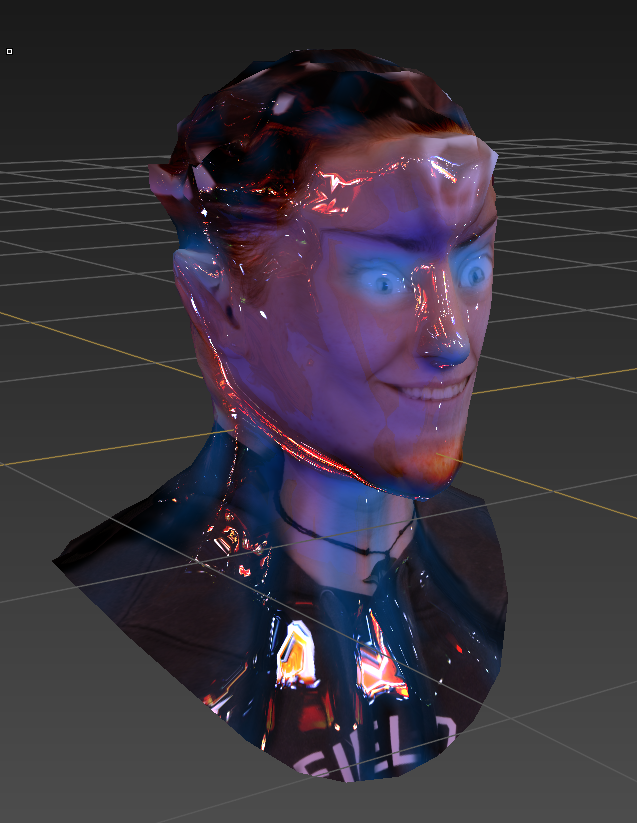
I was using Mudbox to make 3D face shapes
This is my first face. I called this the villain
Next I learned how to stamp a picture on the face. I called this human monster
This is the last face I did. I learned how to change the lighting and putting the face into Photoshop to paint on it. I also learned how to add objects to the face. I called this the fancy man in the hat.

Walk cycle's base

I have all the basic forms of the walk cycles

Now I can draw a nice cleaner lines piece of work. I will also add a face to my character and add the secondary motion to the hair, and add more movement to the necklace. The best walk cycle view (in my opinion) is the front view. This is because the head and hair doesn't look ridged like the other heads. Every walk cycle could use some sort of improvement. I'll finish the newer, better walk cycles

Walk cycle's 3/4 view

The final walk cycle, the 3/4 view
I have drawn a walking cycle a lot of times now, so I have lots more experience with using the software, Toon Boom Harmony.
8 drawn images walk cycle
12 drawn images walk cycle
24 drawn images walk cycle
I can see that the more drawn images I have, the more ridged the head of the character seems/looks. Also with the more drawn images, the less jumpy the movement appears. If I alter the way the hair flows on the character, it would look less 'robotic'. A note to myself when animating the hair, the foot that is on the ground, that is the direction of the hair as it flicks (secondary motion).